

Wi-Co Philadelphia, USA
Bringing the Herd Together
VENUE
April 16th 2026
9:00 - 17:00
1100 Social, Stateside Live! Pattison Ave,
Philadelphia, PA, 19148 USA
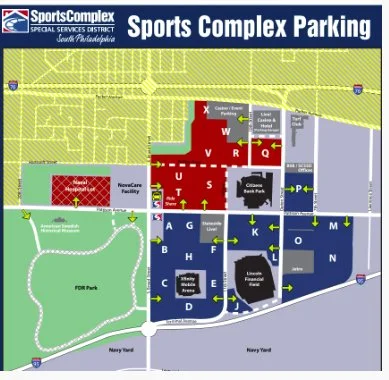
When entering the address in your GPS you can use the following: Lot G, 1187-1323 N Access Rd Philadelphia, PA 19148
When arriving to the venue enter via S Broad Street through the gates on N Access Road. Inform the person in the booth you are there for an event and make your way to Lot G.
Enter via the main doors below the Stateside Live! sign. Registration will be set up directly outside of 1100 Social within the venue.
Parking & Arrival Information
Location:
Xfinity Mobile Arena is located within the South Philadelphia Sports Complex , at Broad Street & Pattison Avenue , adjacent to Lincoln Financial Field and Citizens Bank Park.
Primary Access Road Entry
All guests should enter the Sports Complex via Pattison Avenue and follow signage for the Sports Complex Access Road . This access road runs behind the stadiums and directs vehicles into the designated parking lots surrounding Xfinity Mobile Arena.
Parking is managed by our Stadium Partners and is typically $25–$56 per vehicle . Guests should follow parking attendants upon arrival for lot direction.
Driving Directions
From I-95 North (Delaware):
• Take Exit 19 – Broad Street / Pattison Avenue
• Turn right onto Pattison Avenue
• Follow signs for the Sports Complex
• Turn onto the Sports Complex Access Road as directed by signage/attendants
From I-95 South (Center City / North Philadelphia):
• Take Exit 19 – Pattison Avenue / Sports Complex
• Merge onto Pattison Avenue heading toward Broad Street
• Follow signs for the Sports Complex Access Road
• Proceed into designated parking areas
From New Jersey (Walt Whitman Bridge):
• Cross the Walt Whitman Bridge
• Follow signs for I-95 South
• Take Exit 19 – Pattison Avenue / Sports Complex
• Continue on Pattison Avenue
• Follow signage to the Sports Complex Access Road and parking lots
SPONSORS







SPEAKERS








-
Wi-Fi surveys are widely used to guide design, validation, and troubleshooting decisions — but what do they actually represent? In this session, we’ll break down what common Wi-Fi survey methods capture, where assumptions can creep in, and how survey mechanics influence the resulting data. We’ll explore differences between static and mobile measurement approaches, how form factor and operator movement shape survey outcomes, and why certain datasets align better with real-world client behavior than others. The goal isn’t perfection — it’s understanding the strengths and limits of the data we rely on.
-
Wi-Fi HaLow is moving from years of anticipation into real-world deployment, delivering a new class of wireless connectivity that bridges the gap between traditional Wi-Fi, LoRaWAN, and cellular technologies. Built on the IEEE 802.11ah standard and supported by the Wi-Fi Alliance, HaLow provides long range, low power, secure, IP native connectivity for both industrial and consumer ecosystems.
In this brief presentation, Eric will highlight the latest advances in Wi-Fi HaLow silicon and supporting software stacks, and explore emerging applications enabled by the technology- including battery powered cameras and large area wireless mesh networks.
-
Wireless professionals spend significant time designing networks using the latest hardware, best practices, and optimized configurations. However, once the network is deployed, the clients ultimately decide how the network will behave.
Roaming decisions, rate selection, band preference, and power management are all determined by the client device. Even the best-designed networks can perform poorly when client behavior is misunderstood.
In this talk, we will explore how client-side testing can reveal the true capabilities and behaviors of wireless devices, and how that information can be used to design and configure networks that guide clients toward better decisions.
-
How Wireless Consultants Can Build Recurring Revenue with Remote Monitoring & Troubleshooting
-
6 Years after the opening of 6 GHz spectrum for the US, is it helping? What are the frustration points? What are the results? As regulators around the world continue to work through the spectrum challenges, this presentation will be about where we are today and explore the pro's and con's and the use cases that are making a difference.
-
For over 25 years, Wi-Fi has been woven into the fabric of how we communicate, work, learn, and experience the world around us. In this session, David Coleman explores what lies ahead, from Wi-Fi 8 and Enhanced Broadcast Services to Wi-Fi sensing and the growing role of AI in shaping how networks are designed, operated, and experienced. As AI advances at a pace most companies can barely keep up with—and begins reshaping society in real time—wireless networking is becoming far more adaptive, intelligent, and strategically important. The real opportunity is not just better wireless, but unlocking the Art of the Possible—redefining what can be achieved as connectivity, context, and intelligence begin to converge.
-
Your customers are asking about private cellular. You've probably been asked in the last twelve months... and you may not have loved your answer.
Here's the good news: as a WiFi professional, you already have more of the foundation than you think. RF propagation, site survey methodology, capacity planning, interference mitigation... these don't stop mattering just because the radio changes. The physics is the physics.
But the stuff that doesn't transfer can bite you if you don't see it coming. Spectrum governance through SAS and CBRS tiered access, packet core architecture, SIM-based identity, network-controlled handoffs... these are genuinely new domains.
This session walks through what carries over from your WiFi expertise, where your instincts will serve you well, and where they'll mislead you. We'll cover the real architectural and operational differences, talk through deployment scenarios where private cellular and WiFi work side by side, and give you a practical roadmap for closing the knowledge gap.
-
Every Wi-Fi network would benefit from being surveyed, yet cost and effort have long stood in the way. This session examines how the latest advances in Wi-Fi tools are lowering the barrier and making it possible to survey more networks, more often, and with far less effort and cost.